
Dry sift hash is a solventless cannabis concentrate made by rubbing dried flower over fine mesh screens so the resin glands (trichomes) fall through and the plant matter stays behind. No water, ice or butane is involved. What you get is a powder that ranges from loose kief to hash that melts almost completely, depending on the starting flower and the care taken. If you want to buy sifted resin in Canada, the useful skill is knowing how to read the words on the product page, and that is what this guide covers.
At Budmail we curate hashish, kief and other concentrates from small-batch growers, so below we also point you to the pages where you can browse them.
TL;DR
-
Dry sift is made by sifting dried flower through screens. Bubble hash is made by agitating flower in ice water. Both are solventless.
-
Kief is the loose trichome powder. Hash is trichomes that have been purified or pressed, so the terms overlap but are not identical.
-
Health Canada puts the THC potency of physically concentrated extracts such as hash and kief at up to 60%, against up to 90% for chemically concentrated extracts.
-
Concentrates are stronger than dried flower. Start with a very small amount, wait, and never drive after use.
-
Terms like “full melt” and “static” describe purity and how cleanly a hash vaporizes, not potency.
Table of Contents
What dry sift hash actually is
Cannabis flower is covered in tiny resin glands called trichomes. They hold most of the THC, CBD and aroma compounds. Dry sifting separates those glands from the leaf and stem material mechanically: the flower is gently worked across a screen with openings small enough for the resin heads to pass through but too small for the plant matter.
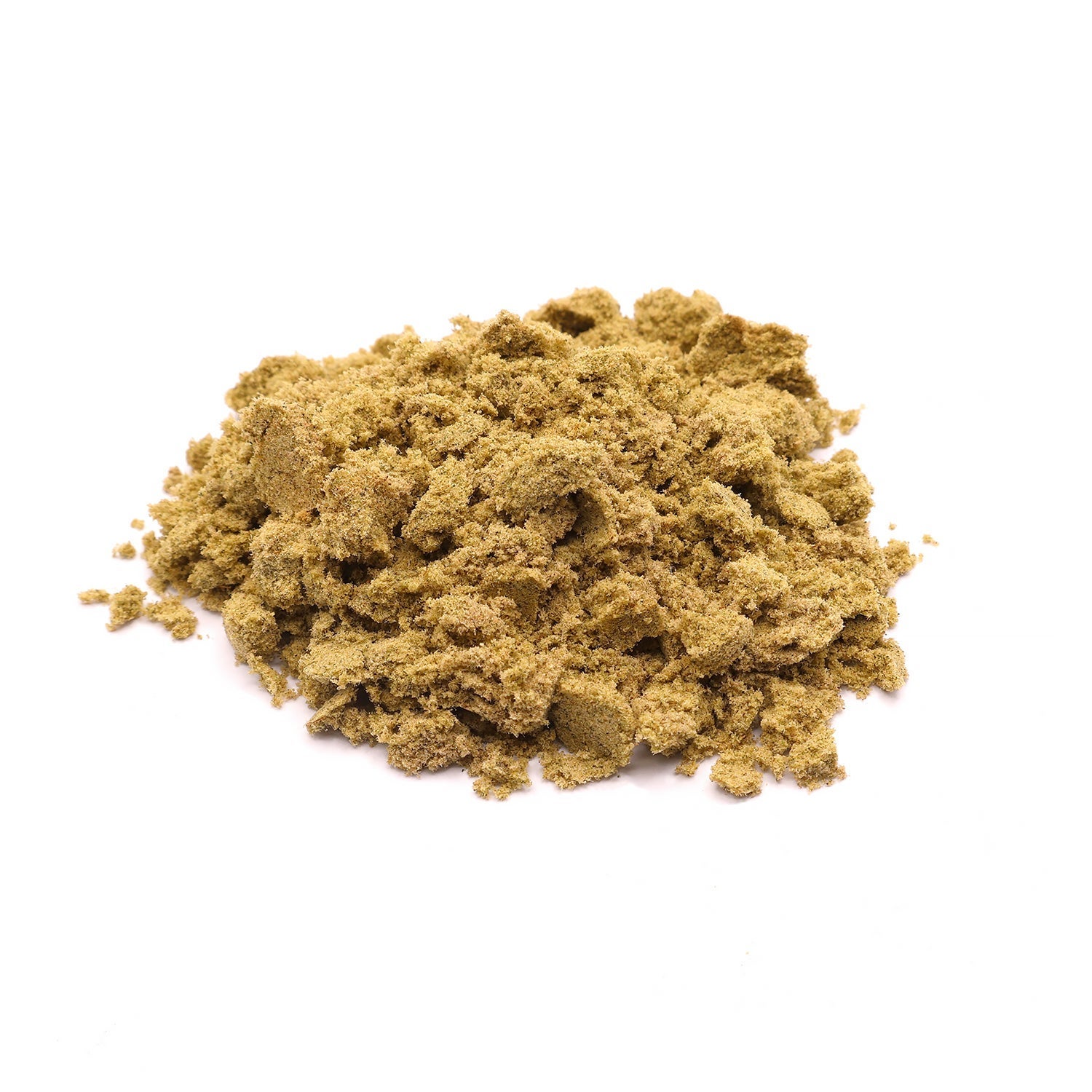
The Canadian Centre on Substance Use and Addiction (CCSA) defines hash as compressed or purified trichomes and kief as trichomes collected after sifting dried cannabis. Dry sift sits between those two ideas. The powder that falls through the first screens is what most people call kief. Finer, cleaner collections from later passes are what people call dry sift hash. Both can be pressed into a block or sold loose.
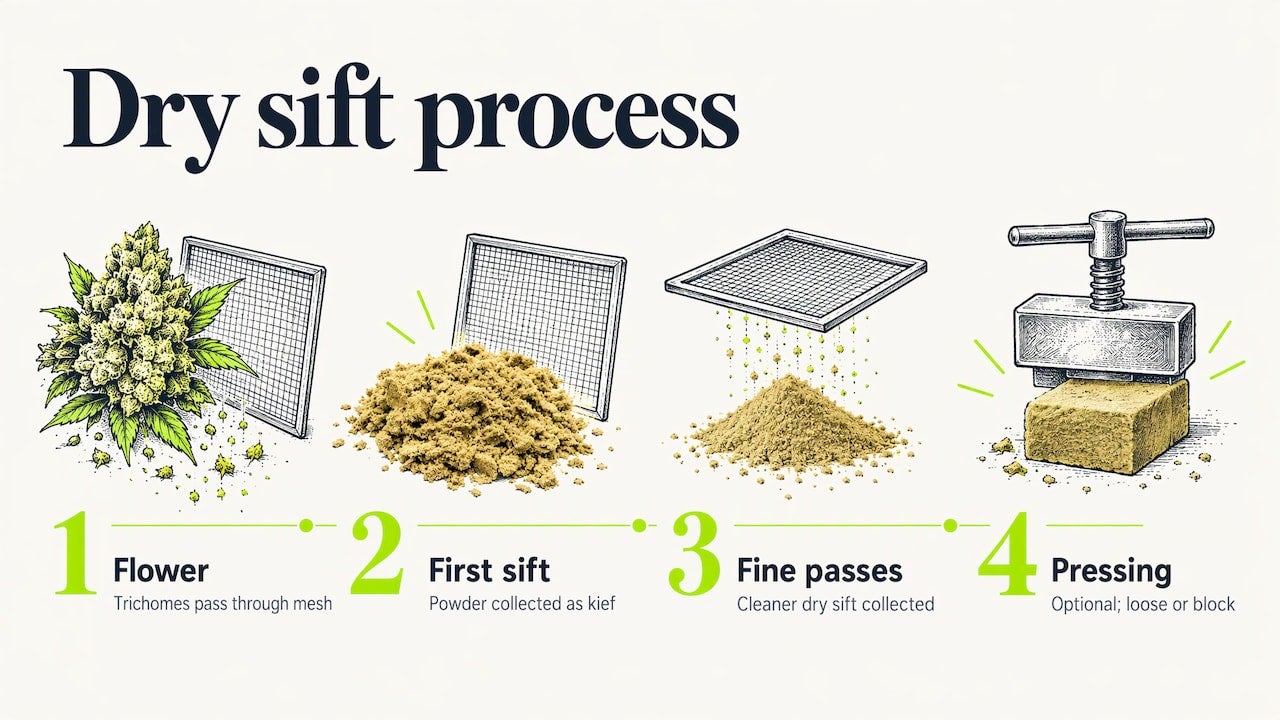
Because nothing is added and nothing is dissolved out, the product reflects the flower it came from. A terpene-rich, well-cured cultivar gives a sifted resin that smells like that cultivar. That is why small-batch, low-yield strains matter to people who buy hash: the sift can only be as good as the plant.
Dry sift vs. kief: where the line falls
Searchers often ask whether hash and kief are the same thing. In everyday use, the difference is mostly about purity and form.
| Kief | Dry sift hash | |
|---|---|---|
| What it is | Loose trichomes collected after sifting dried flower | Sifted trichome heads, usually from finer screens and several passes |
| Typical look | Fine, light green to tan powder | Tan to golden powder, often cleaner and more uniform |
| Plant matter | More likely to include small fragments | Less, because of finer screening |
| Form sold | Loose powder | Loose powder or pressed into a block |
The CCSA notes that pressed hash is usually solid, while water-purified hash may be paste-like. Its 2020 report gives broad historical THC estimates of 40 to 80% for hash and 40 to 50% for kief. Those ranges are rough, so the measured THC on the package of the product in your hands is the number to use.
If you want to try the simpler end of the scale, we carry Hive kief and Lucky Farms kief in a 3.5 g size.
Dry sift vs. bubble hash
These are the two best-known solventless hashes, and they get compared constantly.
How they are made. According to Cannabis & Tech Today’s equipment coverage, dry sift involves rubbing cannabis over mesh screens again and again, while bubble hash uses ice and water to freeze the plant and break the trichome heads away. Both avoid solvents like butane, which is why people describe both as clean-tasting.
What you notice as a user.
-
Texture. Dry sift is a powder or a pressed block that crumbles. Bubble hash is usually a darker, denser, sometimes sticky or pliable material, since it is dried after washing and often pressed.
-
Flavour. Dry sift tends to taste closest to the flower. Bubble hash often reads as heavier and more resinous.
-
Range of quality. The same coverage notes that dry sift can run from top-grade full melt down to plain kief, depending on the input material and the time put into sifting. Bubble hash is graded in a similar way, with the highest grades called full melt.
-
Ways to use it. Both can be sprinkled on or mixed into flower in a joint or bowl, or vaporized in a device made for concentrates.
Neither is simply better. If you like a lighter, flower-forward profile that you can crumble over a bowl, dry sift is a natural fit. If you want a pressed, dense resin that holds together, bubble hash is the one to look at. Our domestic pressed bubble hash in Kush Mints is a good example of that style, and the Lucky Extracts Bubble Gum Hash is another way into hashish if you have not tried it before.
Different types of hash, in plain terms
The hash family is bigger than two methods. Here is how the main types are usually described.
-
Dry sift or dry sieve hash. Made with screens and no water. Loose or pressed.
-
Bubble hash or ice water hash. Made by washing flower in ice water and collecting the resin through bags with different mesh sizes. Often sold pressed.
-
Kief. The loose trichome powder from sifting. Many hash makers treat it as the starting material, and many buyers treat it as a product in its own right.
-
Pressed hash. Any trichome collection compressed with heat and pressure into a slab or puck. Traditional hashish is pressed this way.
-
Rosin and other heat-pressed resin. A solventless product but a different category from the hashes above. Our guide to types of cannabis concentrates walks through these.
A useful way to sort them is by how they are separated: mechanically (screens), with water, or with heat and pressure. All of these fall under what Health Canada calls physically concentrated extracts, a group that includes hash and kief.
Static hash and full melt: what the labels mean
Two terms show up on product pages and confuse newcomers.
Full melt. This describes how a hash behaves when heated. A full-melt hash vaporizes or melts almost entirely and leaves little residue, because it contains mostly trichome heads and very little plant matter. The grading scale used in hash-making goes up to six stars, with full melt at the top, as described in the equipment coverage above. It signals purity and finish, not a higher dose.
Static hash. This is a dry-sift style product that gets an extra cleaning step using static electricity, so that remaining bits of plant matter are pulled away from the resin. The aim is a cleaner, more even result than ordinary sifting. Like full melt, it says something about how the hash is processed and how it should behave when heated.
Neither term replaces the potency printed on the package. Use them to understand the style, and use the label to understand the dose.
Potency: what Canadian rules say and how to read it
Hash is more concentrated than dried flower. Health Canada describes hash and kief as loose trichomes or pressed resin and says physically concentrated extracts can reach a THC potency of up to 60%. It lists chemically concentrated extracts such as hash oil, shatter, budder and wax at up to 90% THC. If you are curious about how those differ, see our pages on shatter vs. wax and popular concentrates and how to use them.
Using hash with care
The CCSA’s 2020 report says the health and safety risks of extracts and concentrates are not well characterized, that risk varies with the product, ingredients and method of use, and that it rises with the amount of THC. It also warns that high-potency concentrates carry a higher risk of over-intoxication than dried cannabis. Used sensibly, that translates into a few habits:
-
Start small and wait. Try a very small amount and give it time before deciding to take more.
-
Mind the method. Smoking exposes you to smoke. Vaporizing a concentrate is a different experience, and strength varies by device and product.
-
Never drive impaired. Health Canada’s health warning messages, effective March 12, 2025, advise against driving while impaired.
-
Know who should avoid it. The same warnings advise against using cannabis while pregnant or breastfeeding, and note higher risks for people younger than 25, including effects on brain development and a greater risk of psychosis and schizophrenia. They also state that higher THC raises the risk of adverse effects such as paranoia, anxiety and dependence.
-
Talk to your doctor if you take medication or have a health condition and are unsure how cannabis fits in.
If you want a gentler route, edibles, tinctures and CBD products are part of our range, and you can compare formats in our guide to hash versus weed.
Choosing a dry sift or hash product
Whether you shop with us or elsewhere in the legal market, a few questions narrow the field quickly.
-
What form do I want? Loose powder suits mixing into flower. A pressed piece suits crumbling or vaporizing.
-
What potency am I comfortable with? Read the total THC on the label and pick the number that suits your experience.
-
What flavour do I like? Because solventless hash carries the profile of its source, strain names and terpene notes are worth reading.
-
How was it made? Dry sift, bubble hash and pressed hash behave differently, as covered above.
-
Is it from a small batch? Small-batch, low-yield strains are where rarer flavours come from.
Where the client’s way helps most
The quality of a sifted or washed hash depends on the flower and the grower. That is why we source small-batch, low-yield strains from growers we trust, and why curation matters more for hash than for most categories.
Find hash and kief at Budmail
Our shop carries hashish and kief alongside flower, concentrates, edibles, vapes, CBD, tinctures and capsules, and topicals. We offer mix-and-match bulk deals, free shipping on orders over $200 and a loyalty rewards program, so a first order can include a few formats to compare side by side. Start with the full hashish and concentrates selection.
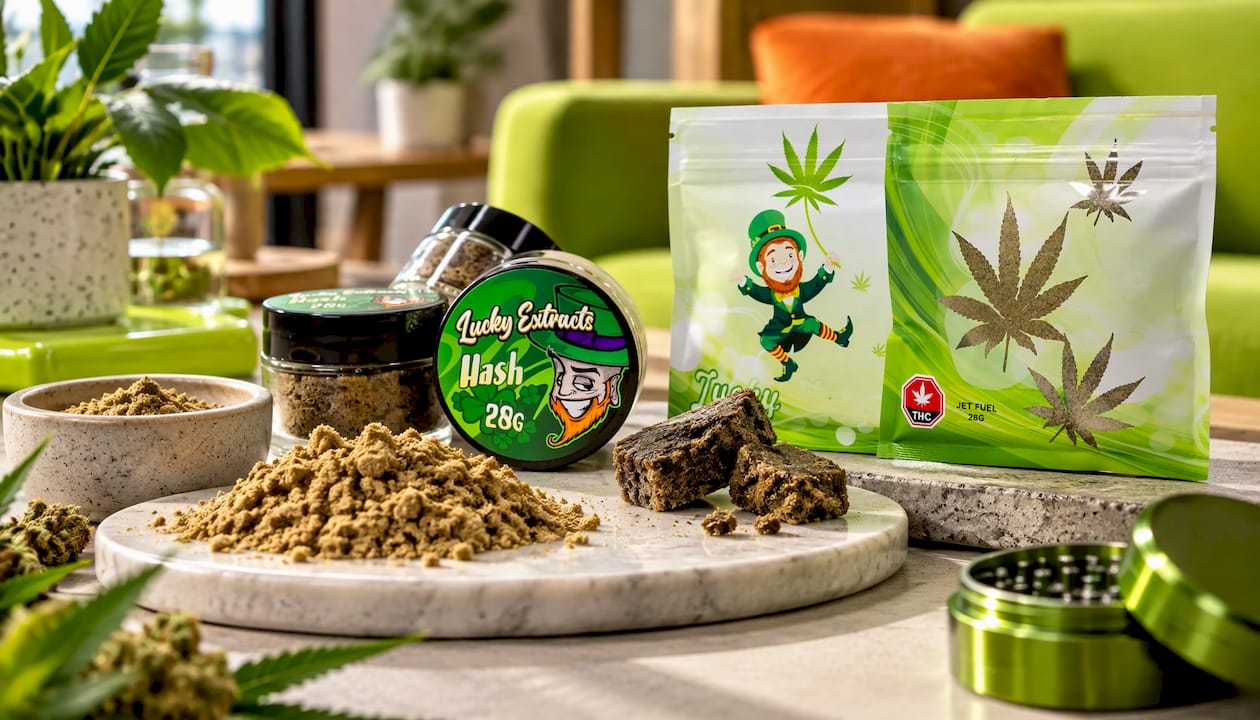
If you prefer to browse by type, our concentrates category lists rosin, shatter and honey oil alongside the hash range.
Our perspective
Hash is the oldest concentrate there is, and it is still the one where the grower matters most. Nothing is dissolved out and nothing is added, so a sifted or washed resin simply shows you what the plant was.
That is the reason we build the shop around small-batch, low-yield strains from growers we trust. Rare cultivars produce less resin per plant and cost more to work with, and they are also where the flavours you cannot find on every shelf come from.
We also think people should be able to try more than one format without committing to a large purchase. That is why we offer mix-and-match bulk deals, free shipping over $200 and loyalty rewards: loose kief, pressed bubble hash and a favourite flower can sit in the same order, and you learn your own preference by comparing them.
the author
FAQ
Is dry sift hash the same as kief?
Not exactly. Kief is the loose trichome powder collected after sifting dried cannabis. Dry sift hash usually refers to a cleaner, more refined collection of those trichomes from finer screens and more passes, sold loose or pressed. In casual use the words overlap.
Is dry sift or bubble hash stronger?
Neither has a fixed advantage. Both are physically concentrated extracts, which Health Canada places at up to 60% THC, and the actual figure depends on the flower and the processing. Compare the total THC printed on each package instead of assuming a method is stronger.
What does full melt mean?
It means the hash melts or vaporizes almost completely when heated, leaving little residue, because it is made mostly of trichome heads. It describes purity and finish, not potency, so the THC on the label is still the number to follow.
How should I start with hash if I am new to concentrates?
Use a very small amount and wait before taking more, since concentrates carry a higher risk of over-intoxication than dried flower, according to the CCSA. Do not drive after use, and speak with your doctor first if you are pregnant, breastfeeding, under 25 or on medication.


