
Cannabis concentrates have become a common choice for Canadians looking for stronger potency, richer flavour, and greater control over how they consume cannabis. While dried flower remains popular, concentrates deliver higher cannabinoid levels and a wide range of textures that shape each session differently.
This overview, types of cannabis concentrates explained, outlines the most common concentrate forms, how they are made, and how they differ in texture, potency, and use. Clear comparisons help first-time and experienced users choose products with greater confidence and clarity.
What Cannabis Concentrates Are and Why They Exist
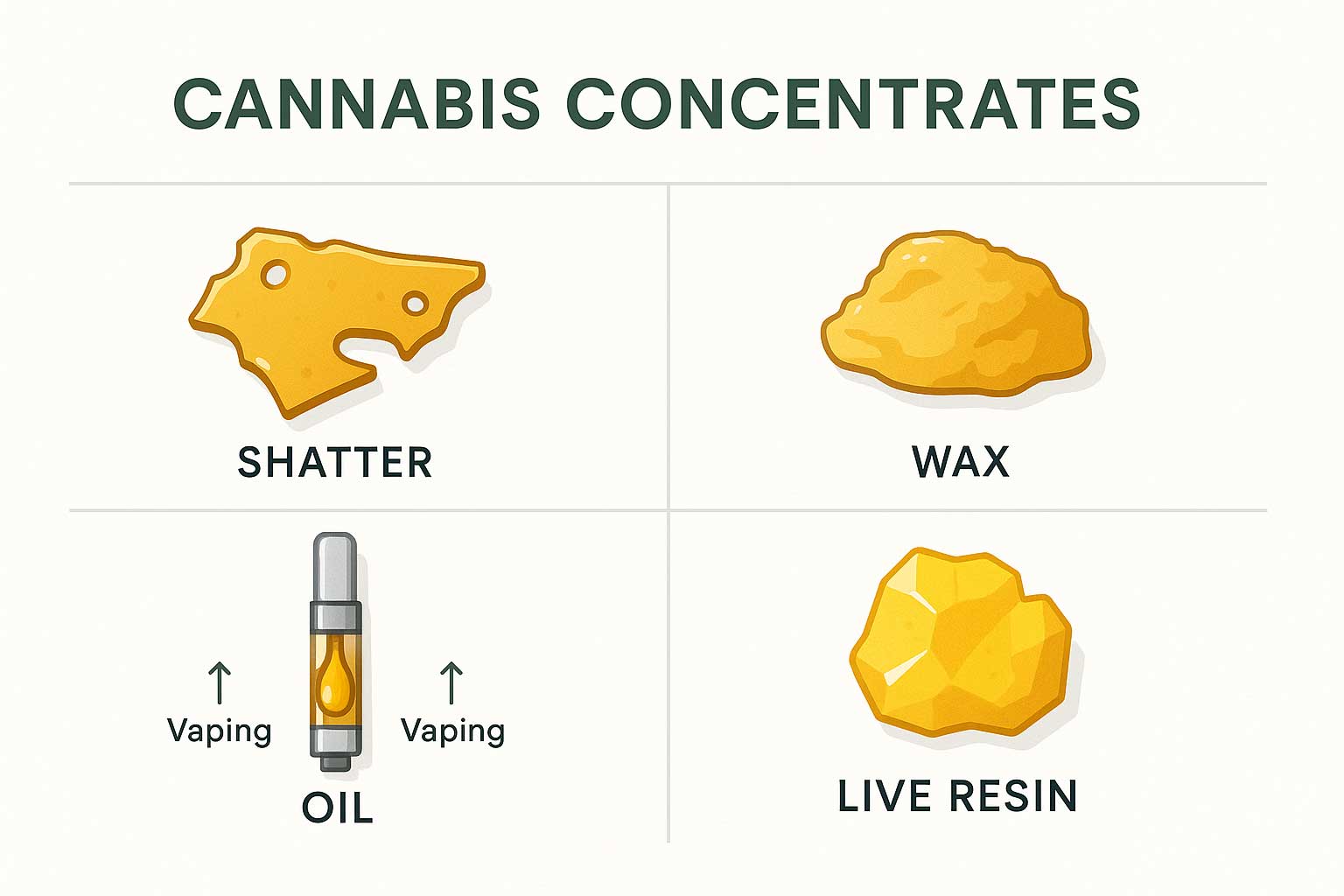
Cannabis concentrates are products created by extracting cannabinoids and terpenes from the cannabis plant. This process removes excess plant material, leaving behind a concentrated form of active compounds.
The result is a product that delivers stronger effects in smaller amounts. Concentrates appeal to users who want potency, faster onset, or specific flavour profiles. They are also used by medical consumers who prefer consistent dosing.
Different extraction methods and post-processing steps create a wide range of concentrate types. These differences shape texture, aroma, and how the product behaves during use.
Dry Sift and Traditional Hash Concentrates
Dry sift is one of the oldest cannabis concentrate forms. It is made by mechanically separating trichomes from dried cannabis flower using fine screens. The result is a powdery concentrate that can be pressed into hash or used as is.
Dry sift tends to have lower potency than modern extracts, but it retains a natural terpene profile. Many users appreciate it for its traditional feel and versatility.
Hash concentrates made from dry sift or water agitation often provide balanced effects rather than sharp intensity. These options appeal to users seeking moderate potency with classic cannabis flavour.
Shatter and Wax Concentrates Explained
Shatter and wax concentrates are produced using solvent-based extraction methods. Although they start similarly, differences in agitation and temperature during processing create distinct textures.
Shatter forms as a translucent, glass-like sheet that breaks cleanly when snapped. It is valued for its stability and ease of portioning. Many users prefer shatter for precise dosing.
Wax concentrates are whipped or agitated, introducing air and producing an opaque, soft consistency. Wax is easier to scoop and handle, which makes it popular among new concentrate users.
Both shatter and wax deliver high potency. Texture choice often comes down to handling preference rather than strength.
Budder, Badder, and Texture Variations
Budder and badder are subtypes of wax concentrates. Budder has a whipped, buttery consistency, while badder resembles thick cake batter.
These textures result from controlled agitation during extraction. Budder and badder are known for strong aroma retention and smooth vaporization.
Many users find these textures easier to work with than brittle concentrates. They are commonly used for dabbing and vaping.
Resin Concentrates and Live Resin
Resin concentrates are produced using fresh or dried cannabis. Live resin is made from fresh frozen plants, preserving terpene content that can be lost during drying.
Live resin is known for bold aroma and layered flavour. It often delivers a more expressive sensory experience compared to standard extracts.
Resin concentrates remain popular among users who prioritize taste alongside potency. Texture varies depending on processing, ranging from saucy to crystalline.
Resin Rosin and Live Rosin
Resin rosin and live rosin fall under solventless concentrates. These products are created by applying heat and pressure to resin or hash rather than using chemical solvents.
Live rosin is pressed from fresh frozen material, while resin rosin may be pressed from cured starting material. Both are valued for clean flavour and minimal processing.
Solventless concentrates appeal to users who prefer chemical-free extraction. They often carry a premium price due to labour-intensive production.
Oil Concentrates and Distillates
Oil concentrates include distillates and other refined extracts. These products are typically clear or amber and contain high cannabinoid concentrations.
Distillates are often used in vape cartridges and infused products. They offer consistent potency and minimal flavour unless terpenes are added back.
Oil concentrates are favoured by users who want predictable effects and flexible consumption options. Medical users often appreciate their precision.
THC Concentrates and Potency Awareness
Most cannabis concentrates contain significantly higher THC levels than flower. This makes dose control important, especially for newer users.
Potency varies by product type and extraction method. Live resin and rosin may feel more nuanced, while distillates and shatter can deliver sharper effects.
Understanding potency helps users choose products that align with their tolerance and experience level. Starting with small amounts supports comfortable use.
Texture, Handling, and Storage Considerations
Texture influences how concentrates are stored and handled. Shatter requires cool storage to maintain structure. Wax and budder remain pliable at room temperature.
Crumble and dry concentrates are easier to sprinkle or portion without tools. Oil concentrates require sealed containers to prevent leakage.
Proper storage protects flavour and potency. Airtight containers and cool, dark environments help preserve quality.
Dab Pens and Modern Consumption Options
Many concentrates are compatible with dab pens and vaporizers. Oil concentrates are most commonly used in cartridges, while wax and live resin may require specialized devices.
Dab pens offer discretion and portability. They appeal to users who want convenience without complex setups.
Matching concentrate type to device improves performance and reduces waste.
Choosing the Right Concentrate for Experience Level
New users often prefer wax, budder, or oil concentrates due to easier handling and smoother onset. These formats reduce complexity during early exploration.
Experienced users may gravitate toward shatter, live resin, or rosin for potency and flavour depth. Texture preference often evolves with familiarity.
There is no single best option. Selection depends on comfort, tolerance, and desired effects.
How Budmail Supports Informed Concentrate Selection
Budmail provides clear product information so users can browse with confidence. Descriptions include texture, potency, and extraction details to reduce guesswork.
Same-day delivery across Greater Vancouver allows users to explore different concentrate types without delay. This convenience supports thoughtful selection rather than rushed decisions.
Budmail’s focus on quality and transparency helps bridge education with access.
Using Education to Make Confident Choices
Understanding the types of cannabis concentrates explained in this guide gives users a foundation for better decisions. Texture, potency, and extraction method each play a role in the overall experience.
Exploring concentrates becomes easier when expectations are clear. With reliable delivery and accessible information, Budmail supports a confident, informed approach to cannabis concentrates.
If you are comparing options or refining preferences, reviewing concentrate characteristics can help you select products that align with your needs and experience level.


