
Good weed passes four checks: it looks frosty and well kept, smells strong and clean, feels springy rather than brittle or damp, and arrives with a label and batch details you can read. You can run the first three in about a minute with a jar or a bag in good light. The fourth takes another minute and tells you what your eyes can’t. Here is how to do each check, what each one can and can’t tell you, and which signs mean you should toss a bag instead of smoking it.
At Budmail we build our selection around small-batch, low-yield strains from growers we trust, so these are the same checks we hold flower to.
TL;DR
-
Smell first. Good flower smells distinct and fresh (citrus, pine, fuel, berry, spice). Hay, grass, ammonia or a musty basement smell is a bad sign.
-
Look for frost, not just color. Visible, glassy trichomes (the tiny resin glands) and intact buds matter more than whether a bud is green, purple or orange.
-
Squeeze gently. Sticky and springy is right. Dust means too dry, and damp means mold risk and extra weight you pay for.
-
Grayish-white powder or a mildew smell means toss it. Mold can make healthy people sick and is dangerous for people with weakened immune systems.
-
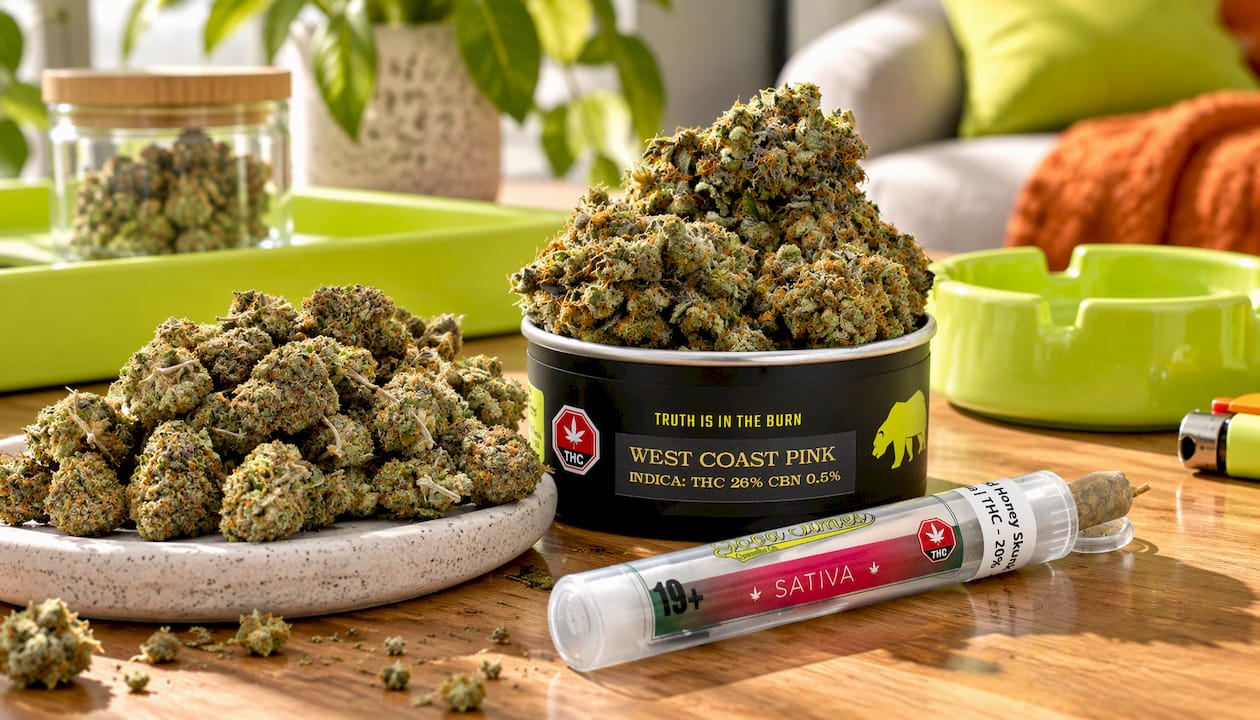
Read the label. In Canada, a legal package carries an excise stamp, a health warning box and a THC symbol, plus batch and testing details.
Table of Contents
Start with the nose
Smell is the most reliable single test because aroma comes from terpenes, the volatile compounds that give each strain its character. Terpenes fade as flower ages or is dried too hard, so a weak nose usually points to an old, rushed or badly stored batch.
Open the jar or bag and take a slow sniff, then break one bud in half and smell again. The inside is where fresh aroma is strongest. What you want:
-
A clear, specific scent: citrus peel, pine, diesel, grape candy, earth and pepper. Different strains smell different, and that is the point.
-
A smell that gets stronger when the bud is ground or broken.
-
No chemical edge, no hay, no cut-grass smell.
What should worry you: a flat smell like dried lawn clippings means the flower was dried too fast or sat too long. A musty, mildewy or hay-like smell can signal mold. Healthline’s mold guide describes moldy cannabis as having a musty or mildewy smell, unlike the fresh aroma of healthy flower. An ammonia smell often points to flower that was bagged while still too wet.
What good weed looks like
Look at the flower in daylight or under a plain white bulb. Colored lighting hides problems.
Trichomes
Trichomes are the frosty, crystal-like glands that coat the buds. They hold much of the aroma and the cannabinoids. On good flower they look glassy or sugar-dusted and cover the bud and the small leaves around it. Sparse, dull or smeared frost usually means rougher handling or a lower grade.
Tip: a loupe or your phone’s macro mode helps. Healthy trichomes look like tiny mushrooms with clear or milky heads. A flat, white, powdery coating is something else entirely (see the mold section below).
Color
Deep greens, purples, oranges and reds can all be healthy. Purple comes from pigments in the plant and varies by strain and growing conditions, so a purple bud is not automatically better. Orange to rust-red pistils (the thin hairs) are normal. What you want to avoid is brown, grayish or washed-out flower that looks burnt, bleached or dull.
Structure and trim
Good buds look intact: dense yet fluffy, with a defined shape. Expect few seeds and few stems. Over-trimmed buds that look like shaved nuggets can lose trichomes in the process, and flower full of stalk and leaf is padding you pay for by weight.
Smaller buds are not a flaw. “Smalls” are often the same flower, grown and cured the same way, in smaller pieces. If you want a straightforward example, our OG Kush smalls show how value pricing and quality can sit together.
How it should feel
Hold a bud between your fingers and squeeze lightly.
-
Sticky and springy: it gives, then returns to shape. This points to a proper dry and cure, meaning the slow drying and jar-aging that preserves aroma and smooths the smoke.
-
Crumbles to dust: too dry. It will burn hot and harsh, and much of the aroma is gone.
-
Spongy, wet or cold to the touch: too moist. Beyond the mold risk, extra water is weight you are paying for.
-
Rock hard and rattling: over-dried or very old.
The feel test and the smell test back each other up. Dry, brittle flower with a weak smell is old. Damp flower with a sour or musty smell is a risk.
The 60-second check, in order
-
Open the package and smell. Stop here if you smell mildew, ammonia or hay.
-
Look at the surface. Frost should be glassy, not white and powdery or fuzzy.
-
Break one bud. The smell should intensify.
-
Squeeze gently. Springy and slightly sticky is the target.
-
Burn a small amount. Good flower burns to a light gray ash and tastes like it smells. A harsh, chemical or hay-like taste is a bad sign.
If you buy online, steps 1 to 4 happen when the package arrives. That is why the label, batch information and a clear description before you order matter so much, as the sections below explain.
What the signs of bad weed look like
Some problems are cosmetic. Others are a health matter.
| Sign | What it usually means | What to do |
|---|---|---|
| Hay or cut-grass smell, flat aroma | Dried too fast or aged out | Poor value, expect harsh smoke |
| Brittle, dusty, crumbling | Over-dried | Poor value, can be used in cooking or infusing |
| Ammonia smell, damp buds | Bagged too wet | Do not smoke |
| Grayish-white powder, fuzzy spots | Possible mold | Toss it |
| Musty, mildewy smell | Possible mold | Toss it |
| Seeds, lots of stems | Poor sorting or trim | Cosmetic, lower value |
On mold, the safety facts are worth knowing. According to Healthline’s mold guide, moldy cannabis usually shows a grayish-white powdery coating and a musty smell, and smoking it may cause coughing, nausea or vomiting in healthy people. It can lead to serious lung or brain infections in people with weakened immune systems or chronic lung conditions. If you are in either group, talk to your doctor before using cannabis, and don’t use anything that looks or smells off.
The same publication notes that if flower looks or smells wrong, throwing it out is the better move, even if you just bought it. Mold is also a storage problem: once you own good flower, keep it in an airtight glass container in a dark, dry place just below 25°C, at roughly 59 to 63 percent relative humidity. Our guides on cannabis storage containers, mold on weed and what to do when your weed tastes bad go deeper.
What your eyes and nose can’t tell you
A beautiful bud can still carry contaminants you cannot see or smell. Pesticide residue, heavy metals and some microbes are invisible. Looks also can’t tell you the real THC content. A frosty bud is not necessarily a stronger one.
That is why professional quality programs combine lab work and sensory review. The CQA Canada certification FAQ explains that its dried-flower certification uses quantitative lab testing plus sensory criteria: aroma, look, feel, flavour and how the flower burns or vapes. It also states the certification is not based on effects or medical applications. Both halves are needed, and the checks above are the sensory half you can do yourself.
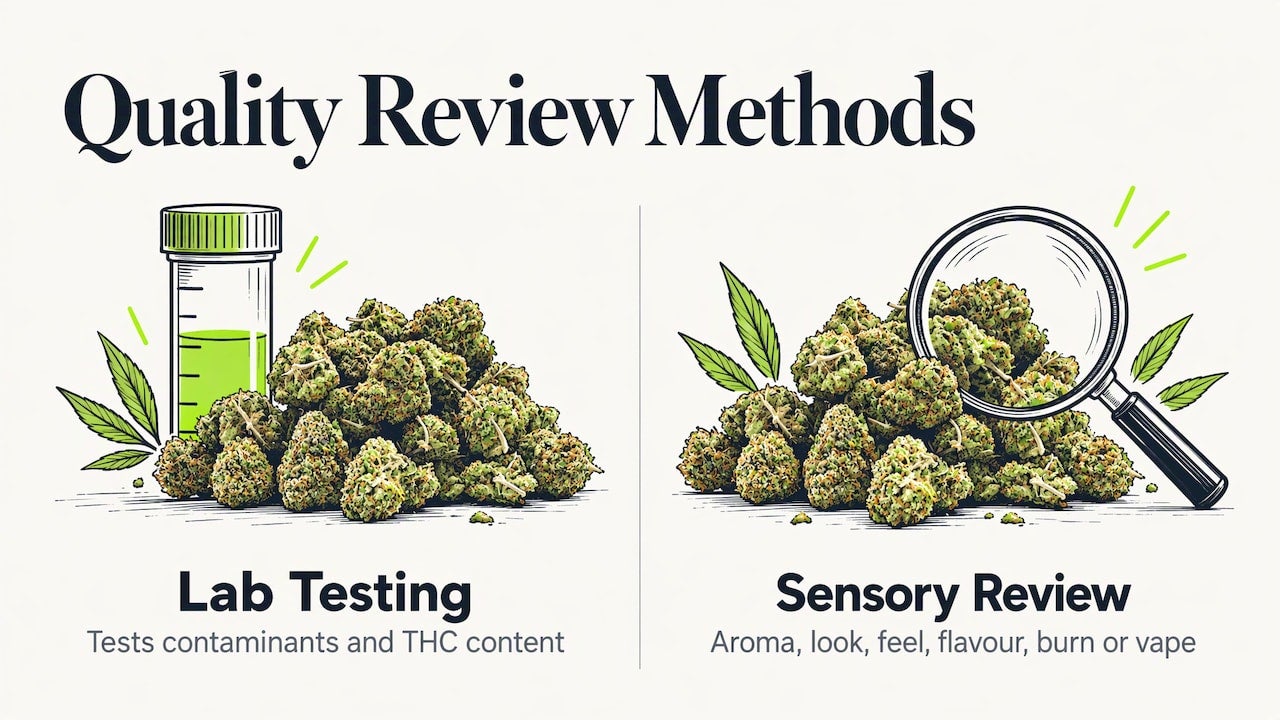
This also answers a common question: how do you judge quality without trusting a potency number or a strain’s fame? Judge the batch, not the name. Two jars of the same strain can differ widely in freshness and cure. Use smell, frost, feel and a burn test, and use the label for the rest.
A note on edibles, capsules and concentrates
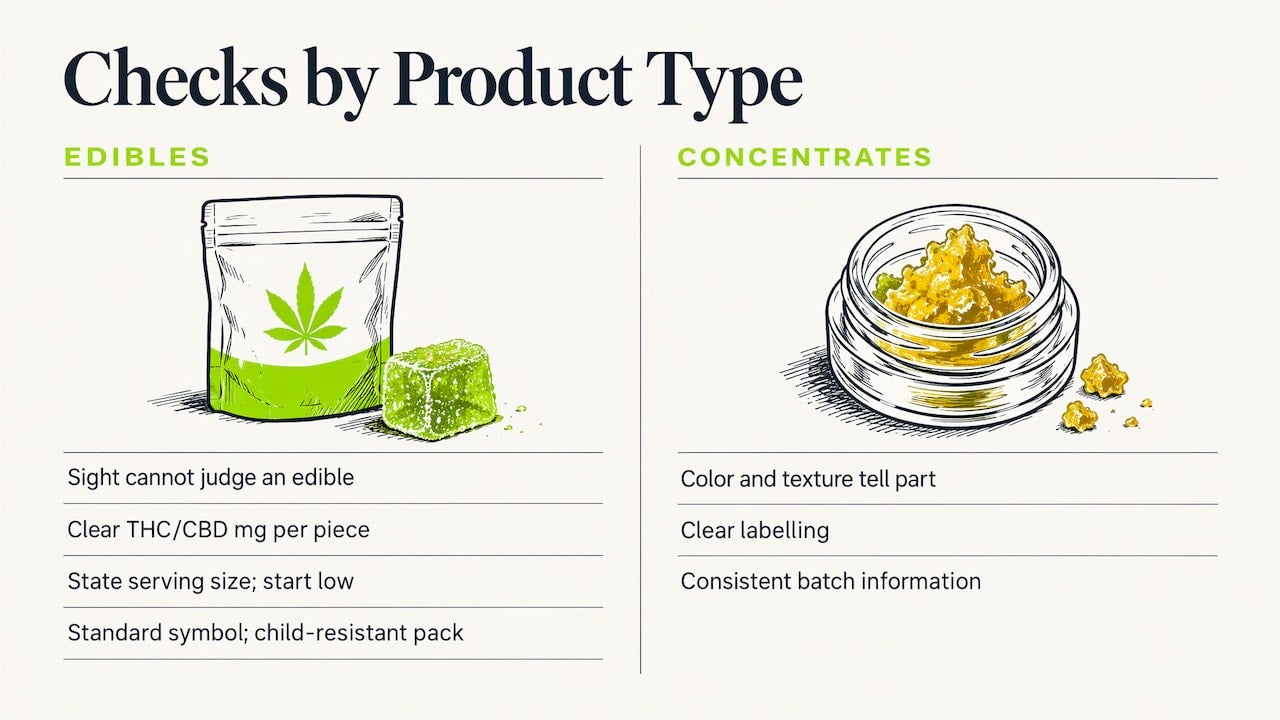
If you prefer edibles, the visual test changes but the principle holds. You can’t judge an edible by sight, so the label and dosing information carry the weight: a clear milligram THC (and CBD) amount per piece, a stated serving size, the standardized symbol and child-resistant packaging. Edibles take longer to take effect than smoking, so start low and wait. Our guide to THC edible capsules covers dose and timing, and our comparison of hash versus weed helps when you are choosing between formats.
For concentrates and hashish, color and texture again tell part of the story, but the same rule applies: clear labelling and consistent batch information come first.
Grading: what the letters mean
You will see flower sold as A through AAAA, with A the lowest. These grades are informal. There is no single legal standard behind them, so one seller’s AAA can be another’s AA. Treat letters as a rough shelf position, then check with your own senses. We explain how we approach it in our cannabis grading system overview.
Buying exotic and small-batch strains
Rare strains are the hardest to judge by name alone, because limited runs mean fewer reviews to lean on. This is where a curated source helps. Small-batch, low-yield strains get more attention per plant, which tends to show in trichome coverage, aroma and cure. It’s why we focus on sourcing from trustworthy growers, and why strains like West Coast Pink sit alongside our other selections.
Why buying curated beats guessing
Every check above works best when someone has already done the screening before the bag reaches you. A curated marketplace takes the first pass: choosing growers, rejecting weak batches and describing product plainly. You still smell, look and squeeze when it arrives, but you start from a shorter, better list.
Our view
Most people judge weed by name and price tag, and both are poor guides. We think quality comes down to the grower, the batch and how the flower was cured and stored. That is why we build our range around small-batch, low-yield strains from growers we trust, and why we give people exclusive access to exotic and hard-to-find cannabis they won’t see everywhere.
We also think good weed shouldn’t be a luxury. Value pricing, mix-and-match bulk deals, free shipping on orders over $200 and a loyalty rewards program are there so you can keep coming back to flower you know is right, not gamble on whatever is cheapest this week.
Use the checks in this guide on every order, from us or anyone. We are confident in what we curate, and we’d rather you buy with a sharp nose than a blind eye.
the author
Where to find quality flower online
Budmail carries flower, concentrates, hashish, edibles and beverages, vapes, CBD, tinctures and capsules, and topicals, with mix-and-match bulk deals and a loyalty rewards program. Orders over $200 ship free. Browse the range on the Budmail store, or see how delivery works in our guide to ordering cannabis flower for delivery in Canada. If you like to start with something easy to roll, our Good Times Cannabis Co. pre-rolls are an option.
FAQ
Does color tell you if weed is good?
Only partly. Green, purple, orange and red can all be healthy and vary with strain and growing conditions. What matters more is that the color looks alive and vibrant rather than brown, gray or washed out, and that the bud is frosty and smells right.
Is stronger-smelling weed always better?
A strong, clear aroma is a good sign of fresh, well-cured flower, because terpenes carry the smell. But it has to be a pleasant, specific smell. A sharp ammonia, musty or mildew odor is a warning, not a mark of strength.
How can I tell if weed has mold?
Look for a grayish-white powdery coating or fuzzy spots, and smell for a musty, mildewy or hay-like odor. Genuine trichomes look glassy and sticky, not flat and powdery. If you suspect mold, don’t smoke it. People with weakened immune systems or chronic lung conditions should be especially careful, and should speak with their doctor.
How should I store weed so it stays good?
Use an airtight glass container in a dark, dry place just below 25°C, with relative humidity around 59 to 63 percent. Keep it away from heat and light, and see our storage containers guide for practical options.
Is THC percentage the best way to judge quality?
No. THC tells you about strength, not freshness, aroma, cure or cleanliness. Use it to set your dose, and use smell, appearance, feel and the label to judge the batch.
Sources
-
Moldy Weed: What to Look for and How to Handle It, Healthline
-
Does Weed Go Bad? What to Look for and Storage Tips, Healthline


