
Understanding how cannabis concentrates are produced helps buyers make informed choices about purity, flavour, and overall experience. One of the most common questions among Canadian cannabis users is how solventless vs solvent based cannabis extraction differs and why those distinctions influence product selection.
This overview explains how each extraction method works, the types of concentrates they produce, and how these processes shape taste, texture, and cannabinoid profile. Clear insight into extraction methods supports confident, well-informed decisions when comparing cannabis concentrate options.
Why Cannabis Extraction Methods Matter
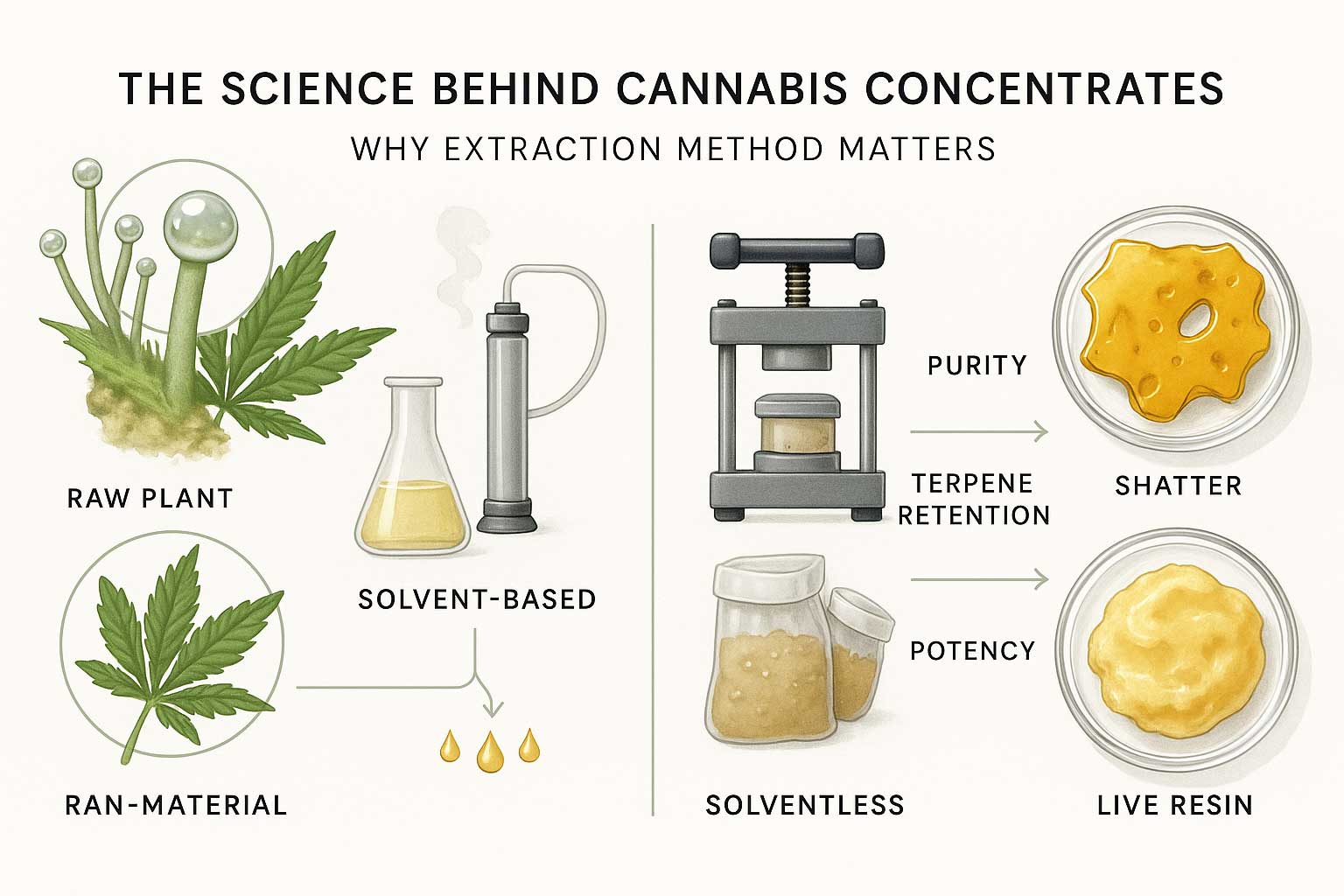
Cannabis extraction refers to the process used to separate cannabinoids and terpenes from plant material. The extraction method directly shapes the final concentrate, influencing potency, aroma, consistency, and perceived cleanliness.
Two main approaches dominate the concentrate space: solventless extraction and solvent-based extraction. Each method uses a different process to isolate compounds, and each comes with distinct advantages depending on priorities.
Extraction methods are not just technical details. They determine how a concentrate behaves during use, how it tastes, and how consistent the experience feels from one session to the next.
Understanding Solventless Extraction
Solventless extraction relies on physical processes rather than chemical solvents. These methods use water, heat, pressure, or mechanical agitation to separate trichomes from the cannabis plant.
Common solventless concentrates include bubble hash and rosin. Bubble hash is created by agitating cannabis in ice water, allowing trichomes to break free and be filtered through mesh screens. Rosin is produced by pressing flowers or hash between heated plates, releasing a thick resin without added chemicals.
Because no solvents are used, solventless extracts are often associated with a clean flavour profile and minimal processing. Many users value this approach for its simplicity and transparency.
Solventless concentrates tend to preserve natural terpene ratios, which can influence aroma and taste. Texture varies based on starting material and pressure levels, but solventless products are often soft, pliable, or slightly granular.
Solvent-Based Extraction Explained
Solvent-based extraction uses chemicals such as butane, propane, or ethanol to dissolve cannabinoids and terpenes from plant material. After extraction, the solvent is removed through controlled purging.
This method allows extractors to pull a wide range of compounds efficiently, resulting in concentrates like shatter, wax, live resin, and oil. Solvent-based extracts are known for strong potency and diverse textures.
When properly produced and tested, solvent-based concentrates are safe for consumption. The quality depends on controlled extraction conditions and thorough removal of residual solvents.
Solvent-based extraction offers flexibility in product form and consistency. This is why many popular concentrates on the Canadian market are created using this approach.
Comparing Solventless vs Solvent Based Cannabis Extraction
The difference between solventless and solvent-based extraction is less about right or wrong and more about preference.
Solventless extraction focuses on minimal intervention. It appeals to users who prioritize natural processing and terpene preservation. These concentrates often feel softer in effect and flavour-forward.
Solvent-based extraction prioritizes efficiency and versatility. It produces a wide range of textures and high THC concentrations. These extracts often deliver stronger effects and sharper onset.
Both methods can produce high-quality cannabis concentrates when done correctly. Lab testing and transparent sourcing matter more than the method alone.
How Extraction Affects Flavour and Aroma
Terpenes play a central role in how cannabis smells and tastes. Extraction methods influence how many terpenes remain intact.
Solventless methods tend to preserve terpene structure because they avoid chemical interaction. This often results in earthy, plant-forward flavour profiles.
Solvent-based methods can capture a broader terpene range, especially when working with fresh frozen material. Live resin products are a common example, offering bright aroma and layered flavour.
Taste preference varies from person to person. Some users prefer the clean simplicity of solventless extracts, while others enjoy the bold intensity of solvent-based concentrates.
Potency and Consistency Considerations
Solvent-based concentrates typically reach higher THC levels due to efficient extraction. This can result in stronger effects with smaller amounts.
Solventless concentrates may feel milder in comparison, though potency still depends on starting material and process quality.
Consistency also differs. Solvent-based products can be engineered into stable textures like shatter or whipped wax. Solventless textures vary more naturally based on pressure and heat.
Choosing between these options often comes down to how much control and predictability a user prefers during sessions.
Safety, Testing, and Transparency
Safety depends on production standards rather than the extraction category. Both solventless and solvent-based concentrates should be lab tested for purity and cannabinoid content.
Reputable dispensaries provide clear product descriptions and testing information. This transparency allows buyers to assess quality regardless of the extraction method.
Understanding how a product is made helps users align purchases with comfort level and expectations.
Selecting Cannabis Concentrates with Confidence in Canada
For Canadian consumers, access to information is as important as access to products. Knowing how extraction methods influence concentrates makes browsing menus more intuitive.
Budmail supports informed decisions by offering clearly labelled concentrates and consistent product availability. Same-day delivery in the Greater Vancouver area adds convenience while supporting responsible selection.
Exploring different extraction styles over time can help users refine preferences without pressure or guesswork.
Making Informed Choices About Extraction Methods
Solventless and solvent-based cannabis extraction methods each serve a purpose. Neither is inherently superior, and both produce high-quality concentrates when handled responsibly.
Understanding these differences allows users to choose products based on flavour preference, potency goals, and handling comfort.
With clear information and reliable delivery, selecting the right concentrate becomes a confident decision rather than a gamble.
Budmail continues to support cannabis users by pairing education with access to carefully curated concentrates across Canada.


