
Understanding how fats interact with cannabinoids helps you plan timing, dose, and setting with more confidence. Edibles move through digestion, and their uptake changes based on whether you have eaten, what you ate, and how your body handles dietary fat. Aligning your routine with your fat metabolism and cannabis edible absorption supports steadier onset and more consistent effects.
Because THC and CBD bind to fats, taking an edible with a normal meal that includes healthy fats can help your body absorb cannabinoids more reliably and make timing easier to predict. An empty stomach may lead to a slower, lighter experience, while a very heavy meal can push the onset further back than expected. Aim for a balanced plate and a measured dose, then give yourself a full two hours before judging the session. Keep your label reading simple: confirm milligrams per piece and per package, and note the CBD to THC ratio. Over a few sessions, repeat the same meal pattern so you can compare results with confidence.
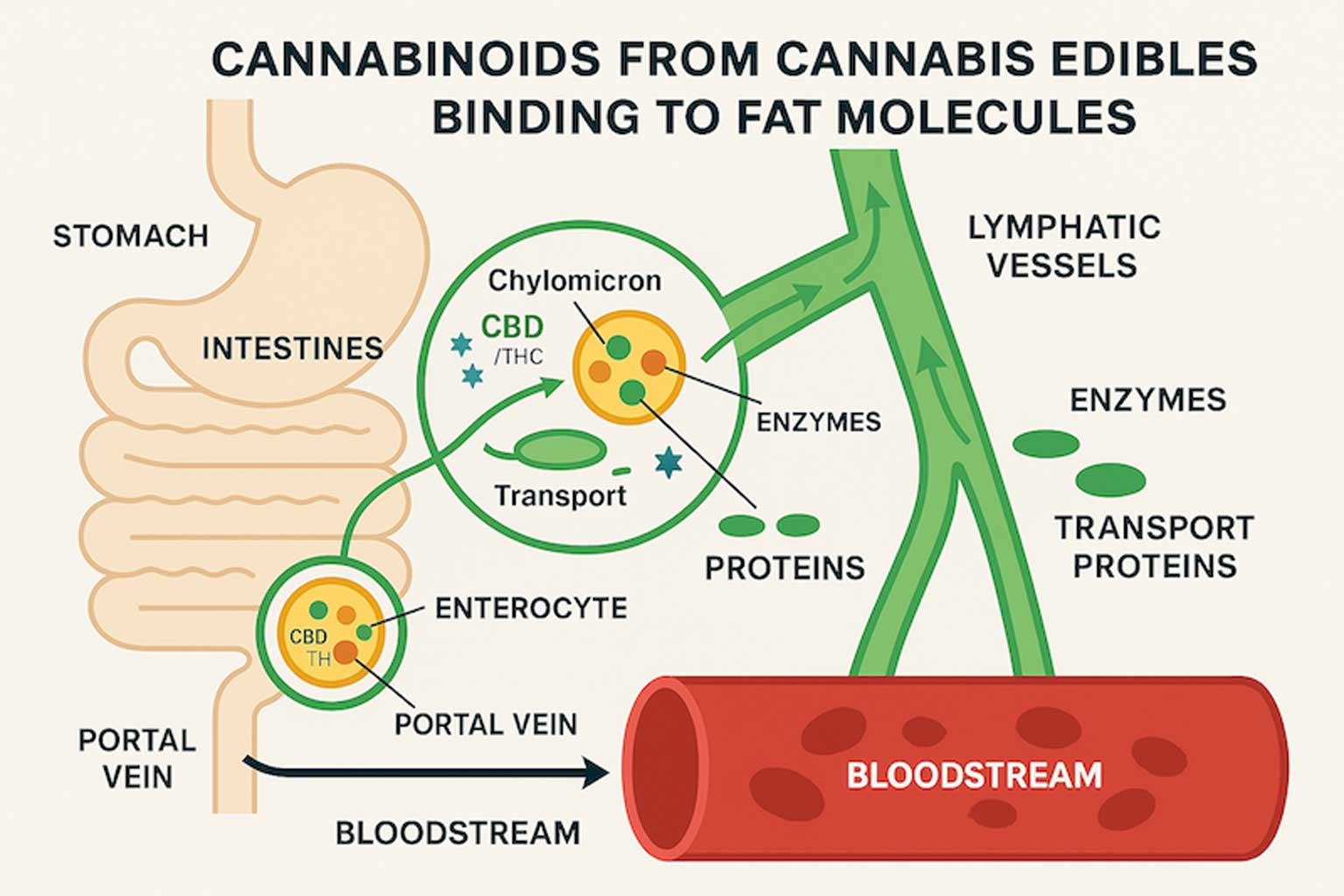
What “Fat Metabolism and Edible Absorption” Means
THC and CBD are lipophilic, so they bind to fats during digestion. When you take an edible with high-fat food, a meal that includes healthy fats, cannabinoids ride along with those fats through the gut, which can raise the absorption rate and make the onset feel clearer and more reliable. If you take an edible in a fasted state, uptake may be slower and lighter. Your own metabolism also matters, since people process fats at different speeds due to genetics, activity level, and recent diet. The idea is simple: what you eat around dosing shapes how much THC and CBD your body can use, when you notice the change, and how long it lasts.
Aim for consistent, moderate-fat meals such as yogurt with nuts, or a salad with olive oil. Very heavy meals can push the onset back, so keep notes and repeat what works. For added consistency, choose edibles made with natural oils, keep your CBD to THC ratio the same while you learn, and give each serving a full two hours before you judge the session or make changes on a later day.
How Fat and the Lymphatic Pathway Can Change How It Feels
Dietary lipids do more than slow or speed digestion. The fat can also steer cannabinoids toward the intestinal lymphatic system. When a meal contains fat, the body forms chylomicrons that carry lipids. Cannabinoids can hitch a ride with these fat droplets, moving into the lymph first, which reduces early breakdown in the liver. Many people describe a result that feels steadier, sometimes stronger, and less variable than dosing on an empty stomach.
If you dose without food, more cannabinoids may go straight to the liver first, which can lower what eventually circulates. Choose normal meals with healthy fats, pair with a measured dose, and keep notes so you can repeat what worked. For example, dose after avocado toast, or a salad with olive oil, then wait the full two hours before judging the effects, and avoid stacking servings on the same day.
Pick What Works for You
Start from your plan for the day or evening. If you want a predictable onset with moderate strength, take your usual cannabis beginner dose after a balanced meal that includes fats such as avocado, nuts, or olive oil. If you prefer the gentlest possible start, dose after a lighter meal and keep milligrams low so you can learn your response before adjusting in future sessions. Sensitive shoppers often favour CBD-leaning or balanced ratios, since CBD can soften intensity for some people.
Regular consumers who already track their range may still benefit from pairing doses with consistent meals, since stable routines reduce guesswork. In every case, keep increments small across separate sessions and record three simple details: dose in mg, time taken, and how it felt at the two-hour mark. Also note your CBD to THC ratio, whether you ate beforehand, and your setting, then repeat the same conditions to confirm results.
How Budmail Can Support You with Edibles
Use Budmail’s clear product pages to match your plan with the label information you need. Confirm the cannabinoid amount per serving and per package, review the CBD to THC ratio, and choose formats that make portioning easy. If you know you will dose with food, select edibles that list natural oils among ingredients, since fat content supports the digestion and lymphatic steps described above. If anything is unclear while you compare options, support can suggest gentle products for beginners or steady choices for experienced shoppers who want repeatable results. Same-day delivery serves the Greater Vancouver Regional District, and mail order runs Canada-wide, which keeps your routine consistent when you find a format and dose that suits you.
How Metabolism Affects THC in Your System
Pick a measured dose, pair it with a normal meal that includes healthy fats, wait at least two hours before judging the session, and write brief notes so you can repeat or adjust on a later day. Fats shape how edibles like gummies are absorbed, which means meal timing and composition are practical tools you can use to guide onset and intensity. Keep your routine simple, dose with food when you want reliable results, and make small changes only on separate days.
Remember that individual metabolism varies with factors like recent activity, sleep, hydration, and body composition, so two identical servings can feel different on different days. Read labels for milligrams per serving and per package, and keep your CBD to THC ratio consistent while you learn.
If you want help choosing between similar products or ratios, Budmail’s team can advise, and Greater Vancouver shoppers can take advantage of same-day delivery.


