
A sativa-dominant strain is a cannabis hybrid sold with a “sativa” label because it is expected to feel more uplifting, clear and daytime-friendly than an indica-dominant one. The label is a useful starting signal. The details that really shape your experience are the terpene profile, the THC level on the package and your dose. This guide shows you how to read all three, which well-known sativa-leaning names to look for, and how to buy safely in Canada.
TL;DR
- “Sativa-dominant” means a hybrid marketed as leaning toward energizing, focused, head-forward effects, usually for daytime use.
- Researchers have found that indica, sativa and hybrid labels don’t reliably predict chemistry, so measured THC, CBD and terpenes are the better guide.
- Sativa-labelled flower tends to carry more sweet, herbal terpenes, which is why many people describe it as bright and citrusy.
- In Canada, start low, read both THC figures on the label, and buy only from a provincially authorized retailer.
Table of Contents
- What “sativa-dominant” means
- What the research says about these labels
- Terpenes: why sativa-labelled flower smells and feels the way it does
- Effects people commonly report
- Sativa-dominant strains people look for
- How to choose a sativa-dominant strain, step by step
- Our perspective
- Shop sativa-leaning flower with us
- Using sativa-dominant cannabis responsibly
- FAQ
- Sources
What “sativa-dominant” means
Cannabis shelves are usually split into three groups: indica, sativa and hybrid. A sativa-dominant strain sits in the hybrid family, but its genetics and marketing lean toward the sativa side. Think of a spectrum rather than two boxes. A pure label on either end is rare. Most flower you see is a cross, and the “dominant” tag tells you which parent the breeder or seller is emphasizing.
If you want the longer background, our guide to indica, sativa and hybrid strains walks through the plant-family history and how the shorthand took hold.
What a hybrid is
A hybrid is a cross between two or more strains, often one traditionally called indica and one called sativa. Because nearly everything on the market has been crossed many times, hybrid is the most common category. You will see three versions on menus:
- Sativa-dominant hybrid: marketed as leaning toward uplifting, mentally active effects.
- Balanced hybrid: marketed as a middle path, neither strongly energizing nor strongly sedating.
- Indica-dominant hybrid: marketed as leaning toward body-heavy, relaxed effects. Our Biscotti strain guide is a good example of how that side is described.
So when someone asks what “indica-sativa hybrid” means, the plain answer is a plant with mixed ancestry, labelled by which side it is said to favour.
What the research says about these labels
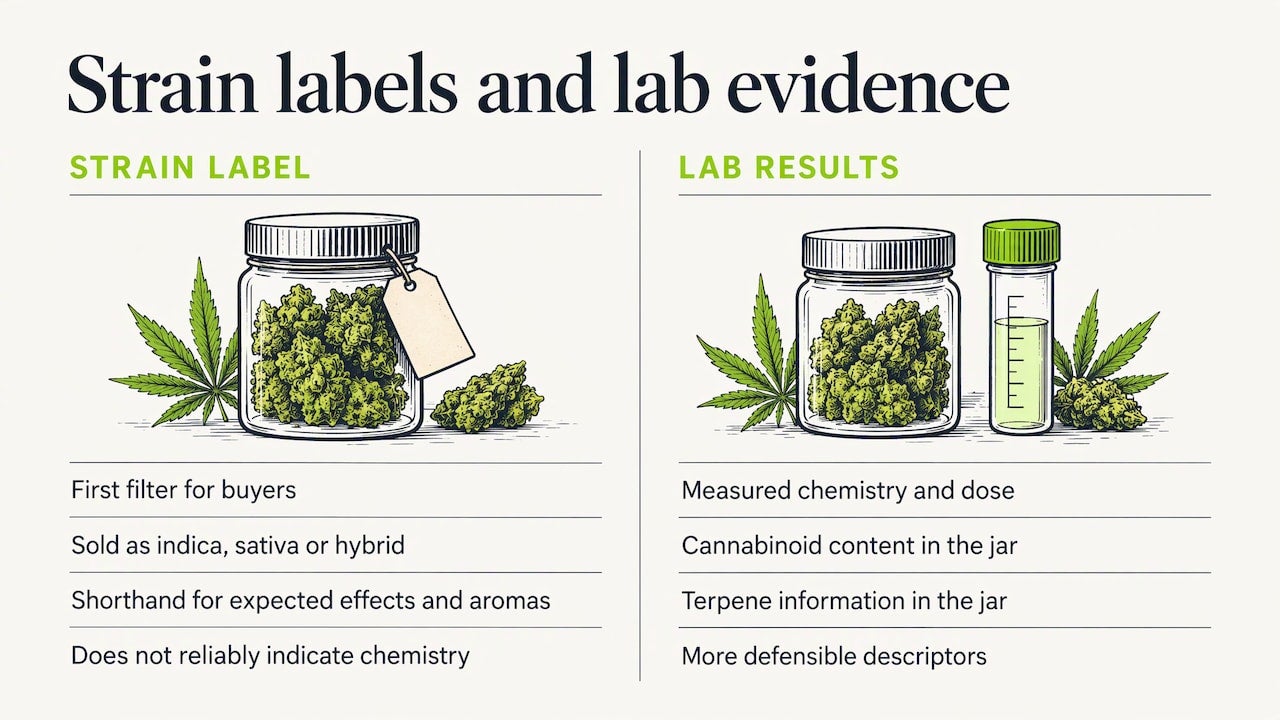
Here is the honest picture. A 2026 peer-reviewed review concluded that consumer-facing indica, sativa and hybrid labels do not reliably indicate genetic structure, major cannabinoid profile or therapeutic outcomes. Its authors point to measured chemistry and dose as more defensible descriptors.
Researchers at Dalhousie University reached a similar view: the words are largely meaningless as a chemical classification, yet they persist as everyday shorthand for the effects and aromas people expect.
What does that mean for you as a buyer? Use the label as a first filter, then confirm with the numbers. The label says what a strain is sold as. The lab results and terpene information say what is in the jar.
Terpenes: why sativa-labelled flower smells and feels the way it does
Terpenes are the aromatic compounds that give cannabis its citrus, pine, fuel or berry character. In the Dalhousie work, sativa-labelled strains had higher amounts of sweet and herbal terpenes such as farnesene and bergamotene, although the overall correlation between labels and terpenes was weak.
In practice, this is why a sativa-dominant jar often smells bright: lemon, pine, tropical fruit, sometimes a diesel edge. That scent is a more useful clue than the word on the front of the package. If you want to go deeper, see our primers on cannabis terpenes and the full terpene guide. Terpenes also sit at the centre of the entourage effect, the idea that cannabinoids and aromatic compounds work together.
Effects people commonly report
A 2023 study of products offered to Ontario consumers notes that users report different experiences by type: indica for relaxing, sativa for energizing. The same paper found people tend to use sativa during the day and describe feeling alert or energized.
Common words for the sativa-dominant experience include:
- Uplifted and talkative
- Focused or creative
- Good for daytime errands, walks or social plans
Everyone’s tolerance and body chemistry differ, so treat these as common descriptions, not promises. High-THC, head-forward flower can feel racy for some people. If you are prone to anxiety, choose a lower THC percentage and a small first dose.
Sativa-dominant strains people look for
Three names come up over and over in Canadian rankings, and the same ones appear across the pages that rank for this topic:
| Strain | Typical description | Aroma and flavour |
|---|---|---|
| Jack Herer | Classic sativa-dominant hybrid, associated with clear, creative energy | Pine, spice, citrus |
| Sour Diesel | Fast, high-intensity, fuel-forward | Diesel, citrus |
| Green Crack | Energy-focused, daytime profile | Sharp citrus, mango |
Others you will see regularly are Durban Poison, Super Lemon Haze, Amnesia Haze, Blue Dream and Strawberry Cough. Our Blue Dream breakdown covers one of the most widely known sativa-leaning hybrids in detail.
Strain names are not standardized. Two jars with the same name from different growers can differ in terpenes and THC, which is exactly why the lab numbers matter more than the name.
Why sativa can be harder to find in Canada
If you have trouble finding a true sativa-dominant flower, you are not imagining it. A 2023 profile of Ontario retail products found that inhalable products were more often indica-dominant, while ingestible products were more often sativa-dominant. Sativa-type plants tend to be tall and slow to finish, which makes them less convenient for large commercial growers. That is part of why small-batch growers matter for anyone hunting energizing, terpene-rich flower.
How to choose a sativa-dominant strain, step by step
- Decide when you will use it. Daytime, a creative project or a social evening are classic sativa moments. If you want help winding down at night, an indica-dominant option may suit you better; see our best indica strains in Canada.
- Check the terpene profile. Look for terpinolene, limonene, pinene or the sweet, herbal notes mentioned above, and smell the product if you can.
- Read the THC number. Dried cannabis offered in Ontario in early 2022 averaged 22% THC, and the authors caution that high-potency cannabis can have detrimental effects on mental health and addiction outcomes. A lower-THC sativa is a sensible choice if you are new or sensitive.
- Pick the format. Flower, vapes, concentrates and edibles all behave differently, and the format changes onset and duration.
- Start low and wait. Take a small amount, wait, and only then decide whether you want more.
Reading a Canadian label
Health Canada says legal packages carry an excise stamp, the standardized cannabis symbol, a bilingual health warning and child-resistant packaging. It also states that legal cannabis is tested for contaminants and for the accuracy of its THC and CBD content.
One label detail trips people up. Researchers have noted that consumers often struggle with quantitative THC labelling, and Canadian labels display both total THC, which includes THCA, and a THC figure that excludes THCA. For flower you plan to smoke or vaporize, the total THC figure is the one that reflects the potential strength. Our explainer on THC vs CBD helps with the rest of the label.
Edibles with a sativa label
Sativa-labelled edibles are common, but the label does not change how edibles work. The same research flags that edibles can have delayed, unpredictable effects, and inexperienced users are the most affected by confusing labels. Health Canada limits edible cannabis to 10 mg THC per container. Wait the full onset time before taking more, and read our edibles guide for dosing basics.
Our perspective
We think the best way to shop for a sativa-dominant strain is to treat the label as the opening question, not the answer. A name and a percentage tell you very little. Aroma, terpene character and the grower behind the batch tell you much more.
That is why we focus on small-batch, low-yield strains from growers we trust. Sativa-leaning plants are demanding to grow, and the people who take that trouble tend to care about how the flower smells, cures and finishes. We curate with that in mind, so you can find exotic and hard-to-find varieties in one place instead of searching across a dozen menus.
We also want you to buy with confidence. Our range spans flower, concentrates, hashish, edibles, vapes, CBD, tinctures and capsules, and topicals, so you can match the format to the moment. Mix-and-match bulk deals, free shipping on orders over $200 and our loyalty rewards program are there to make quality easier to keep coming back to.
the author
Shop sativa-leaning flower with us
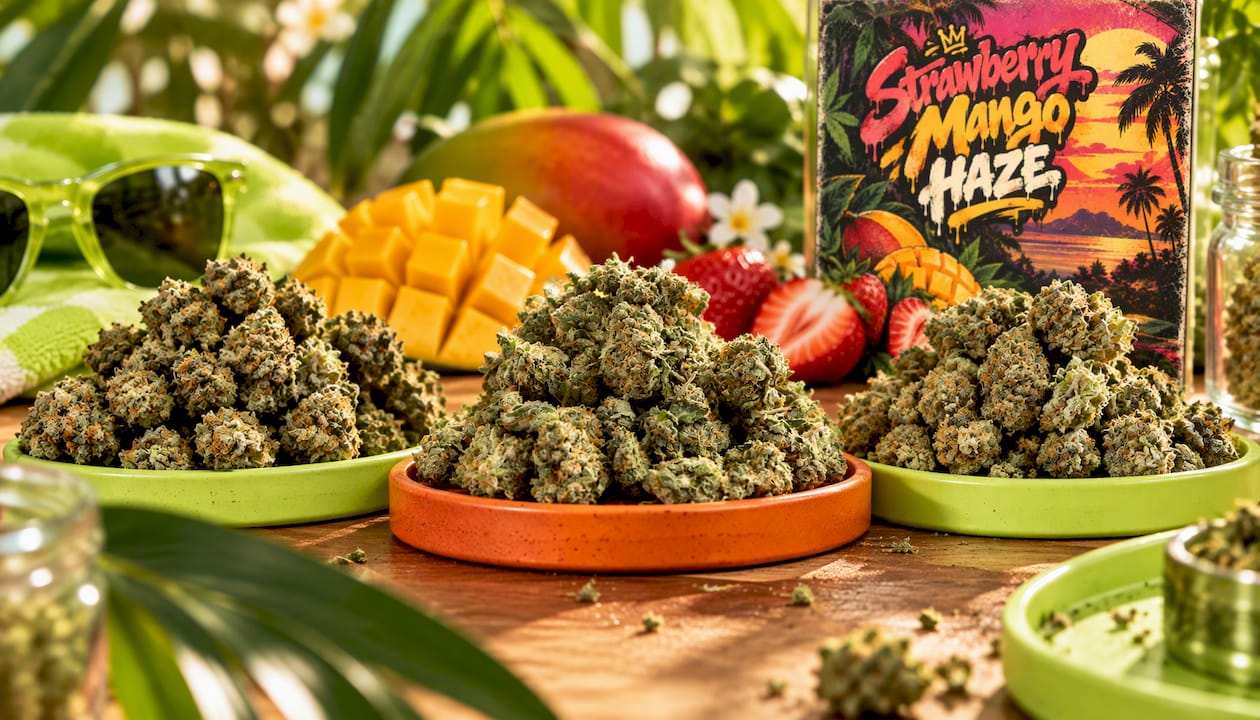
If you are ready to try something bright and terpene-forward, start in our flower category, where you will find small-batch picks such as MuM’s Cannabis Strawberry Mango Haze. You can also browse flower, concentrates, hashish and more and mix and match to build a bulk order. Orders over $200 ship free, and repeat purchases earn loyalty rewards.
Keep in mind that Health Canada’s guidance is that legal recreational cannabis must be bought from a retailer authorized by your province or territory. Check the rules where you live before you order.
Using sativa-dominant cannabis responsibly
A few practical habits keep the experience pleasant:
- Begin with a small amount. If you are inhaling, a single small puff is plenty to start, and with edibles the lowest available dose is the right first step.
- Keep sessions to daytime or early evening if you find energizing strains hard to wind down from.
- Pair higher-THC flower with a calm setting, water and food.
- Avoid driving or operating machinery after use.
- If you have a history of anxiety, psychosis or heart conditions, or you take prescription medication, talk to your doctor or pharmacist before using cannabis.
- Store everything in its original child-resistant packaging, out of reach of children and pets.
The Ontario authors also suggest that public messaging should reflect lower-risk cannabis use guidelines, which is a good rule for anyone: choose lower-potency products and avoid frequent, heavy use.
FAQ
Is a sativa-dominant strain the same as a sativa?
Not quite. A sativa-dominant strain is a hybrid that leans toward sativa genetics or is marketed that way. A “pure” sativa is much rarer, since most commercial flower has mixed ancestry.
Do sativa-dominant strains really make you energetic?
Many people report feeling alert, focused or creative, and they often choose sativa for daytime. Research suggests the label itself is a loose predictor, so terpenes, THC level and dose matter just as much. Your own response is the final word.
What are the dominant terpenes in sativa-labelled flower?
In Dalhousie’s analysis, sativa-labelled strains had more sweet and herbal terpenes such as farnesene and bergamotene. Many bright, citrusy strains also feature terpinolene or limonene, so check the product page or the packaging.
What does indica-dominant mean?
It is a hybrid that is marketed as leaning toward indica traits, usually described as more relaxing and body-focused. It is the mirror image of sativa-dominant, and the same caution applies: confirm with lab numbers and terpenes.
How much THC should I look for in a sativa-dominant strain?
There is no single right number. Strength ranks as a lower purchase priority for many Canadians, but high THC can bring more risk, so if you are new, choose a lower percentage and a small dose. Always read the total THC figure on the label.
Sources
- Do consumer-facing “Indica,” “Sativa,” and “Hybrid” labels reflect composition? (Springer, 2026)
- Indica and sativa labels are largely meaningless (Dalhousie University)
- On offer to Ontario consumers three years after legalization (Frontiers in Psychiatry)
- Cannabis Legalization and Acute Harm From High Potency Cannabis Products (PMC)
- Reduce your risk: Choose legal cannabis (Health Canada)


